Google released Gemini 3.7 Flash on August 13, 2026, just 23 days after Gemini 3.6 Flash. The coding numbers moved a long way in three weeks: 43.6% on FrontierCode 1.1 Main against 34.4% for its predecessor, and 65.3% on DeepSWE v1.1 against 49.0%. Input tokens now cost $0.75 per million and output $3.75 per million.
Two details went almost entirely unreported on launch day, and both change the decision. That headline price is introductory and expires on December 31, 2026, after which it doubles. And Google's own footnote excludes the European Economic Area, the United Kingdom, Switzerland and Nigeria from the only consumer surface the model runs on. This article covers the verified benchmarks, what each one actually measures, the real pricing picture next to cheaper rivals, where you can reach the model today, and whether switching is worth the effort.
The Key Takeaways
- Gemini 3.7 Flash launched August 13, 2026 at $0.75 input / $3.75 output per million tokens, 23 days after Gemini 3.6 Flash. That price is introductory and rises to $1.50 / $7.50 on January 1, 2027, exactly what 3.6 Flash cost at launch.
- Coding is the real upgrade. DeepSWE v1.1 climbs from 49.0% to 65.3% and AutomationBench nearly doubles, from 17.0% to 30.4%.
- Independent testing backs it up. Artificial Analysis scores it 56 against 52 for 3.6 Flash, and ranks it first of 186 models on output speed at 340.1 tokens per second.
- Most of Europe is locked out. Consumer access runs through Spark only, and Google excludes the EEA, UK, Switzerland and Nigeria.
- It is not the cheapest option. GPT-5.6 Luna costs $0.20 / $1.20 and DeepSeek V4-Flash $0.14 / $0.28, both well under Google's rate.
What Is Gemini 3.7 Flash?
Gemini 3.7 Flash is Google's fast, low-cost tier model, tuned this cycle for coding, agent workflows and multi-step execution rather than raw reasoning. Google's launch announcement calls it "our most intelligent workhorse model yet for coding and agents", and the benchmark selection backs that framing up. Every headline number Google published is a software engineering or automation test.
The cadence is the story as much as the model. Google has now shipped three Flash releases in under two months while Gemini 3.5 Pro, promised for June, still has not appeared. Flash stopped being the budget sideshow some time ago. It is currently Google's entire public shipping rhythm.
The full spec sheet
Most launch-day coverage skipped the specifications entirely, because Google put them on the model card rather than in the announcement. They are worth reading, because one of them is a bigger practical upgrade than any coding benchmark.
| Specification | Gemini 3.7 Flash |
|---|---|
| Model code | gemini-3.7-flash |
| Released | August 13, 2026 |
| Input context window | 1,048,576 tokens (1M) |
| Output limit | 65,536 tokens (64k) |
| Knowledge cutoff | March 2026 |
| Input modalities | Text, image, video, audio, PDF |
| Thinking levels | Low, medium, high (minimal returns an error) |
| Input price | $0.75 per 1M tokens (introductory) |
| Output price | $3.75 per 1M tokens (introductory) |
| Context caching | $0.075 per 1M tokens, plus $0.50 per 1M tokens per hour storage |
| Safety updates | CBRN and cyber offence safeguards |
The figures come from the Gemini 3.7 Flash model card, which is the authoritative reference if you are wiring this into production. Two details deserve more attention than they got. The context window and output limit match Gemini 3.6 Flash exactly, so nothing was traded away for the coding gains. And the knowledge cutoff holds at March 2026, though the model card notes some domains reflect data only to January 2025, so treat questions about the last few months with care.
The thinking configuration is the practical lever here. Gemini 3.7 Flash accepts low, medium and high thinking levels and defaults to medium, and the minimal setting that worked on some earlier models now returns an error. Since output tokens include thinking tokens, that setting is the difference between a cheap call and an expensive one.
Gemini 3.7 Flash Pricing
Nearly every launch-day write-up reported the same line: half the price of Gemini 3.6 Flash. That is true against the price 3.6 Flash launched at, and misleading about what you pay today.
The expiry date in the footnote
Google's own footnote is unambiguous: "Introductory pricing expires on December 31, 2026. Starting January 1, 2027, $1.50/1M input tokens and $7.50/1M output tokens will apply." That is not a discount on a new lower rate. It is a four-and-a-half month promotion, after which Gemini 3.7 Flash costs precisely what Gemini 3.6 Flash cost on its launch day.
There is a second wrinkle the comparison hides. Google also moved Gemini 3.6 Flash onto the same $0.75 and $3.75 introductory rate. As of today the two models cost exactly the same, so the upgrade decision comes down to capability, not price. Our full breakdown of Gemini 3.6 Flash covers what the older model still does well.
How it compares to cheaper rivals
No ranking article on launch day put Gemini 3.7 Flash next to a non-Google model. Once you do, the value story gets more complicated.
| Model | Input per 1M | Output per 1M | Notes |
|---|---|---|---|
| Gemini 3.7 Flash | $0.75 | $3.75 | Rises to $1.50 / $7.50 in January |
| Gemini 3.6 Flash | $0.75 | $3.75 | Same introductory rate today |
| Gemini 3.5 Flash-Lite | $0.30 | $2.50 | Cheapest Gemini tier |
| Claude Haiku 4.5 | $1.00 | $5.00 | Dearer on both sides |
| GPT-5.6 Luna | $0.20 | $1.20 | Roughly a third of Google's input rate |
| DeepSeek V4-Flash | $0.14 | $0.28 | Cheapest of the group. Moves to peak and off-peak rates on August 16 |
Gemini 3.7 Flash is not the budget option. It undercuts Claude Haiku 4.5 on both input and output, which is a genuine win, but GPT-5.6 Luna costs about a quarter as much on input and under a third on output. DeepSeek V4-Flash is cheaper still, at roughly a fifth of Google's input rate. Those DeepSeek figures are rates as of August 13. DeepSeek splits into peak and off-peak pricing on August 16, after which V4-Flash runs $0.44 input and $1.32 output at peak, halving to $0.22 and $0.66 off-peak, so it stays the cheapest option either way. Anyone picking purely on cost per token has two better answers, and both get further ahead when Google's promotion lapses in January. Our AI pricing comparison tracks the full field as these rates move.
Gemini 3.7 Flash Benchmarks
Google published five benchmark pairs against Gemini 3.6 Flash. The new model wins every row, and two of the margins are large enough to matter in practice.
| Benchmark | What it measures | 3.7 Flash | 3.6 Flash |
|---|---|---|---|
| FrontierCode 1.1 Main | Hard competitive programming problems | 43.6% | 34.4% |
| DeepSWE v1.1 | Long-horizon software engineering | 65.3% | 49.0% |
| WebDev Arena | Human-voted web development quality (Elo) | 1588 | 1538 |
| GDP.pdf | Comprehension of complex documents | 34.0% | 22.0% |
| AutomationBench | Multi-step enterprise workflow automation | 30.4% | 17.0% |
The two that stand out are DeepSWE v1.1 and AutomationBench. A jump from 49.0% to 65.3% on long-horizon software engineering is a 16-point gain on the test closest to what an agent does over a long session. AutomationBench nearly doubling, from 17.0% to 30.4%, points the same direction. Both measure whether a model can hold a plan together across many steps without drifting, which is exactly where cheap models have historically fallen apart.
One caveat belongs next to those numbers. An AutomationBench score of 30.4% still means the model fails roughly seven out of ten multi-step automation tasks. The improvement is large and the absolute number is low, and Google chose to lead with the delta rather than the level.
The model card carries four more scores that did not make the announcement, and they fill in the shape of the model. Gemini 3.7 Flash hits 97.0% on GDM-MRCR v2 at 128k, which is near-perfect long-context retrieval, and 85.8% on Terminal-bench 2.1. Computer use lands at 47.9% on OSWorld-2.0. Then there is Terminal-bench 3.0, where the score drops to 14.9%. That last figure is the honest one. Move to a harder version of the same test and the model solves roughly one task in seven, which is a useful reminder of how much benchmark numbers depend on which edition you quote.
What independent testing found
Vendor benchmarks are vendor benchmarks, so the more useful question is what neutral measurement says. Artificial Analysis has already scored the model, and its results are stronger than Google's own framing suggested.
| Measure | Gemini 3.7 Flash | Gemini 3.6 Flash |
|---|---|---|
| Intelligence Index | 56 | 52 |
| Output speed | 340.1 tokens/sec | 210.0 tokens/sec |
| Blended price per 1M | $0.58 | $1.16 |
| Context window | 1.0M | 1.0M |
Two results deserve attention. Artificial Analysis ranks Gemini 3.7 Flash first out of 186 models on output speed at 340.1 tokens per second. It also scores 56 on the Intelligence Index, ahead of Claude Sonnet 5 at 55 and just behind GPT-5.6 Terra and Muse Spark 1.2 at 57.
That second number is the one that separates this launch from the last one. Gemini 3.6 Flash arrived faster and cheaper than its predecessor while scoring identically on the same index, which earned it a round of underwhelmed coverage. Gemini 3.7 Flash moves from 52 to 56 and halves the blended cost at the same time. This release is not just cheaper. It is measurably better. For where that puts it against the wider field, our best AI models rankings are updated within 48 hours of any major launch.
Where You Can Actually Use Gemini 3.7 Flash
Developer access is broad and immediate. The model is live in the Gemini API through Google AI Studio, in Android Studio, in Google Antigravity, and across the Gemini Enterprise Agent Platform and app.
Consumer access is a different story, and much narrower than the headlines imply. In the Gemini app, Gemini 3.7 Flash reaches you through Spark only, Google's always-on personal agent, and Spark requires a Google AI Pro or Ultra subscription. There is no free tier route to this model in the app today. Our comparison of Gemini Spark against Claude Cowork covers what that agent actually does once you have it.
The regions Google left out
The announcement says Spark is available to subscribers "in over 160 countries", and almost every write-up stopped at that number. The footnote continues: the rollout excludes the European Economic Area, Nigeria, Switzerland and the United Kingdom.
For a large share of European readers that single line outranks every benchmark in this article. If you are in the EU, the UK or Switzerland, you cannot reach Gemini 3.7 Flash through the Gemini app at all right now, whatever you pay for AI Pro or Ultra. The API route stays open, so developers in those regions are unaffected. Everyone else waits, and Google has given no timeline.
Why Google Keeps Shipping Flash
Gemini 3.5 Pro was announced at I/O in May 2026, where Google said it looked forward to rolling the model out the following month. June came and went. Google has not issued a second date since, and said nothing about Pro alongside this launch. Bloomberg reported in July that the model was held back to improve its coding performance, and that an attempt to fix this by updating training data produced disappointing results.
The newsletter SemiAnalysis wrote in early August that Google had quietly cancelled Gemini 3.5 Pro and was promoting Gemini 4 in its place. Google has not confirmed that, no tier-one outlet has matched it, and Google's own last on-record position, from Logan Kilpatrick in July, was that 3.5 Pro is testing with partners. Treat the cancellation story as one newsletter's claim rather than established fact.
What is verifiable is the pattern. Three Flash releases in seven weeks, a Pro model roughly three months past its only stated window, and a separate announcement that pre-training has begun on Gemini 4. Our running coverage of what is known about Gemini 4 follows where the Pro line goes next.
Should You Switch to Gemini 3.7 Flash?
If you are already calling Gemini 3.6 Flash, switch. The two models cost the same today, and 3.7 Flash wins every published benchmark, several by wide margins. There is no argument for staying on the older model.
If you are choosing a budget model from scratch and the workload is agentic coding, Gemini 3.7 Flash earns a test. That DeepSWE result is the strongest long-horizon number any cheap-tier model has posted. If you are choosing on price alone, pick GPT-5.6 Luna or DeepSeek V4-Flash instead, and remember that Google's rate doubles in January while theirs do not.
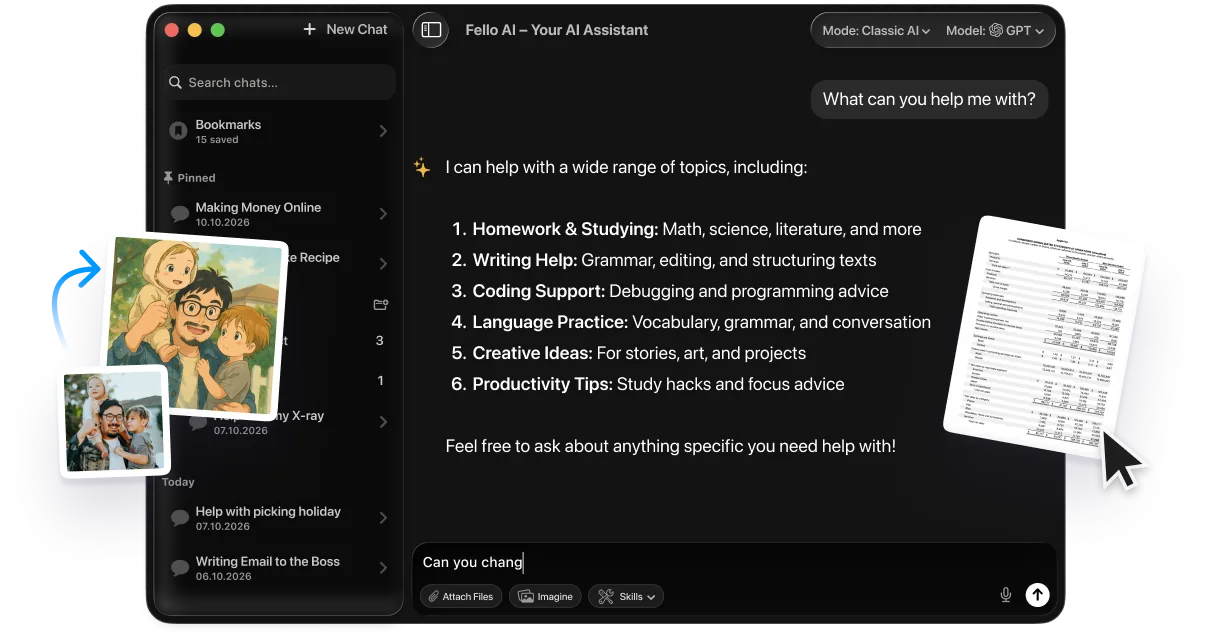
The broader point is that no single model wins across the board any more, and the cheap tier now changes every three weeks. Running one subscription against one provider means re-evaluating every time a launch like this lands. Fello AI puts Gemini on your Mac alongside ChatGPT, Claude, Grok and DeepSeek in a single native app, so comparing a new release against the model you already use takes one click rather than another API key.
Frequently Asked Questions
Is Gemini 3.7 Flash free?
No. In the Gemini app it runs only inside Spark, which requires a Google AI Pro or Ultra subscription. Developers reach it through the paid Gemini API, Google AI Studio, Android Studio and Antigravity. The API free tier does list the model, but consumer app access is subscription-gated.
What is the Gemini 3.7 Flash context window?
1,048,576 tokens, or 1M, with a 65,536-token output limit. Those figures match Gemini 3.6 Flash exactly. They appear on the Gemini 3.7 Flash model card and in the Gemini API model documentation rather than in the launch announcement, which is why most launch-day coverage omitted them.
Why can't I use Gemini 3.7 Flash in Europe?
Spark, the only consumer surface running the model, excludes the European Economic Area, the United Kingdom, Switzerland and Nigeria. Google stated the exclusion in a footnote to the launch post and gave no timeline for those regions. API access is unaffected.
When does the Gemini 3.7 Flash introductory price end?
December 31, 2026. From January 1, 2027 the rate rises from $0.75 to $1.50 per million input tokens, and from $3.75 to $7.50 per million output tokens. Context caching doubles at the same time, from $0.075 to $0.15 per million tokens.
Is Gemini 3.7 Flash better than Gemini 3.5 Pro?
There is no way to compare them, because Gemini 3.5 Pro has never shipped. It was announced at I/O in May 2026 for release the following month, and Google has issued no new date since. Bloomberg reported coding performance as the cause of the delay. Google gave no Pro release date alongside this launch either.