OpenAI shut down ChatGPT Atlas, its standalone AI browser, on August 9, 2026, less than a year after it launched. The company confirmed the sunset on July 9, and if you built Atlas into your daily workflow on Mac, your bookmarks, history, and saved passwords did not carry over automatically. OpenAI’s own wording is that Atlas “may no longer open, browse, or support agentic workflows” after that date, so if the app still opens on your Mac today, treat it as unsupported rather than safe.
Atlas only ever ran on macOS, so this hits Mac users hardest. This guide covers exactly what happened, why OpenAI killed the browser, what you can still recover if you missed the export deadline, and the best ChatGPT Atlas alternatives for Mac right now, from OpenAI’s own replacement to multi-model apps that are not tied to a single company’s roadmap.
The Key Takeaways
- Atlas shut down on August 9, 2026. OpenAI announced the sunset on July 9, less than a year after the October 2025 launch.
- It was Mac-only the whole time. Atlas never shipped a public Windows, iOS, or Android version in its entire run.
- Your data did not transfer. Bookmarks, history, open tabs, saved passwords, and cookies had to be exported manually before August 9.
- Features moved into ChatGPT. Atlas’s browsing and agent tools are now folded into the ChatGPT desktop app, ChatGPT Work, Codex, and a Chrome extension.
- The safest replacement is multi-model. A Mac app like Fello AI gives you ChatGPT, Claude, Gemini, Grok, and DeepSeek in one place, so no single vendor’s “side quest” cull can pull the rug out again.
What happened to ChatGPT Atlas?
On July 9, 2026, James Sun, who leads OpenAI’s browsing efforts, posted on X that the company was sunsetting Atlas. His words were direct. “The current targeted date for deprecation is 8/9, and we’ll share more information in the upcoming days both in-app and via email.” That gave users a hard deadline of August 9, 2026, after which access ended permanently.
Atlas launched in October 2025 as an “agentic browser” built around the idea of chatting with your web browser. It could navigate pages, log into accounts, and complete multi-step tasks on your behalf. The problem was reach. By the time OpenAI pulled the plug, it still had no public release for Windows, iOS, or Android, so its entire audience was a slice of Mac desktop users at a time when mobile crossed 50% of global web traffic. OpenAI decided the browser is a feature, not the destination, and that embedding AI browsing into products people already use beats asking them to switch browsers.
Why OpenAI killed Atlas
The shutdown is part of a wider cleanup. Former applications CEO Fidji Simo told the company to cut back on “side quests,” the same directive that led OpenAI to shut down its Sora video tool. Rather than maintain a separate browser, OpenAI redistributed Atlas’s best ideas across the products with real scale.
Security did not help Atlas’s case either. Within a week of the October 2025 debut, researchers demonstrated two separate vulnerabilities. One was a prompt injection attack, where hidden instructions embedded in an ordinary web page could hijack the browser’s AI assistant into following malicious commands. The second was a flaw where a malformed URL could expose information about sites the user had previously visited. For a browser whose whole pitch was letting an agent act on your behalf, that was a bad look.
So where did the features go? Atlas’s agentic capabilities were absorbed by ChatGPT Work, OpenAI’s work-focused agent, while the ChatGPT desktop app gained a more robust built-in browser for navigation, logins, downloads, and page interaction. A new Chrome extension adds page context and summarising to the browser you already run, and a cloud browser handles remote tasks on OpenAI’s servers. The pieces live on; the standalone app does not.
What happened to your Atlas data
This is the part that caught people out. Your Atlas data did not move automatically to any other app. Bookmarks, browsing history, open tabs, saved passwords, and cookies all stayed locked to Atlas unless you exported them yourself. OpenAI’s guidance was to export bookmarks as an HTML file and manually back up anything else worth keeping, and to move saved passwords into a dedicated password manager or your new browser before the cutoff.
ChatGPT conversation history is a separate matter and was never part of the shutdown. Your chats still live in your ChatGPT account, subject to your plan and workspace settings, so nothing you typed into ChatGPT itself was lost with the browser.
Missed the deadline? What you can still recover
If August 9 arrived before you exported anything, do not delete the app yet. OpenAI said Atlas “may” stop opening rather than promising a hard kill switch, so on many Macs the application and its local profile are still sitting on disk. That local data is your best remaining shot at a recovery.
Atlas was Chromium-based, which works in your favour. Its profile folder lives under your user Library, and bookmarks and history are stored in standard Chromium formats that other Chromium browsers can read. Before you touch anything, copy the whole Atlas application-support folder to another drive so you have a snapshot that no update or uninstall can take away.
Two caveats are worth knowing up front. Saved passwords are encrypted against your macOS Keychain and are the least likely thing to survive outside Atlas itself, so treat those as gone and reset them rather than hunting for a recovery trick. And because Atlas no longer receives security updates, do not keep browsing in it while you dig data out. Pull the files you need, then move to a supported browser.
The best ChatGPT Atlas alternatives for Mac
The right replacement depends on what you actually used Atlas for. If you wanted an AI agent that browses and clicks for you, a browser-shaped tool fits. If you mostly used Atlas as your central hub for talking to AI on the Mac, a multi-model desktop app is the better and more durable choice. Here are the strongest options in each direction.
Fello AI (best multi-model Mac hub)
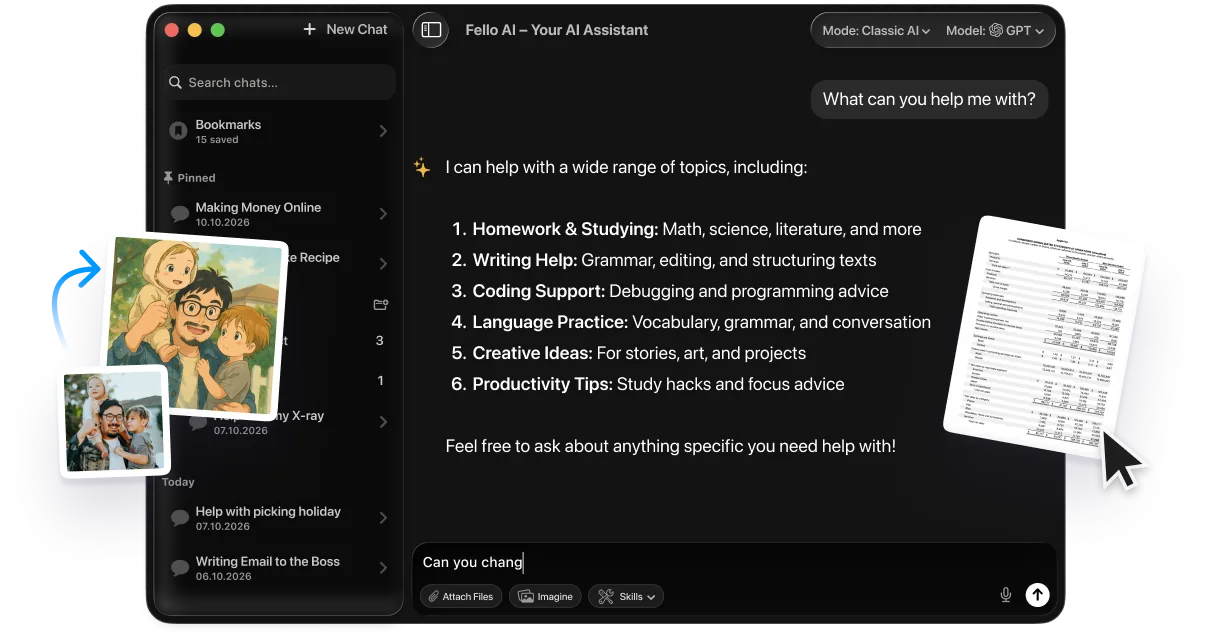
If what you valued about Atlas was having AI at the centre of your Mac, Fello AI is the most future-proof answer. It puts ChatGPT, Claude, Gemini, Grok, and DeepSeek in a single native app, so you switch models with a click instead of juggling separate subscriptions and windows. It is also a creation tool, not just a chat box, generating images, slide decks, documents, PDFs, and spreadsheets from a prompt.
The strategic advantage matters here. Atlas died because it depended on one company’s priorities. A multi-model app spreads that risk across every major provider, so if any single model is discontinued or degraded, you just switch. Fello costs $9.99 per month and holds a 4.7-star rating across more than 25,000 reviews. You can grab it from the Fello AI App Store page. It is not a web browser, so it will not click through websites for you, but as your day-to-day AI workspace it outlasts any single-vendor tool.
ChatGPT desktop app (OpenAI’s official replacement)
The most direct swap is OpenAI’s own ChatGPT desktop app, which is where Atlas’s features moved. It now bundles a built-in browser for navigation, logins, and downloads, plus ChatGPT Work and Codex for agentic tasks. OpenAI also points users to its Chrome extension when a task needs an existing Chrome profile, a signed-in session, or your open tabs. Codex itself recently drew fire after Codex was found writing terabytes to Mac SSDs. If you are happy staying inside the OpenAI ecosystem and only need one model, this is the low-friction path, and it keeps your existing ChatGPT history. We break down the standalone client in our ChatGPT desktop client for Mac guide. The tradeoff is the same lock-in that just cost Atlas users their browser.
Perplexity Comet (best agentic AI browser)
If you specifically want a browser that reasons and acts, Perplexity Comet is the closest like-for-like replacement for Atlas. It is built around an AI assistant that can research, summarise pages, and carry out tasks across tabs, with Perplexity’s cited-answer engine underneath. Comet is the tool to try first if agentic browsing was the whole point of Atlas for you.
Dia by The Browser Company
From the team behind Arc, Dia is an AI-first browser that treats a chat assistant as a native part of the browsing experience rather than a bolt-on. It leans into writing help, page context, and a cleaner take on the AI browser than most. It is a solid pick if you liked the concept of Atlas but want a more polished, actively developed product.
Google Gemini and AI-enhanced Chrome
Google now ships a native Gemini app for Mac and has been baking Gemini directly into Chrome, so you get AI page assistance without leaving the browser you probably already use. Microsoft is doing the same with Copilot in Edge. These are the “AI is a feature of my existing browser” options, which is exactly the philosophy OpenAI adopted when it decided a standalone browser was not worth maintaining.
ChatGPT Atlas alternatives compared
| Tool | Type | Best for | Model choice | Price |
|---|---|---|---|---|
| Fello AI | Multi-model Mac app | AI hub + content creation | ChatGPT, Claude, Gemini, Grok, DeepSeek | $9.99/mo |
| ChatGPT desktop app | Desktop app + browser | Staying with OpenAI | OpenAI only | Free / Plus |
| Perplexity Comet | AI browser | Agentic web tasks | Perplexity models | Free / Pro |
| Dia | AI browser | Polished AI browsing | Built-in | Free tier |
| Gemini + Chrome | Browser + AI | Google ecosystem | Gemini only | Free / AI Pro |
Why a multi-model app is the safer long-term bet
Atlas is the second OpenAI product cut in a matter of weeks, after Sora. That is the real lesson here. When your AI setup depends on one company’s roadmap, a single strategic decision can erase it, and you inherit a painful data migration on someone else’s timeline. Betting your workflow on one vendor is convenient right up until it is not.
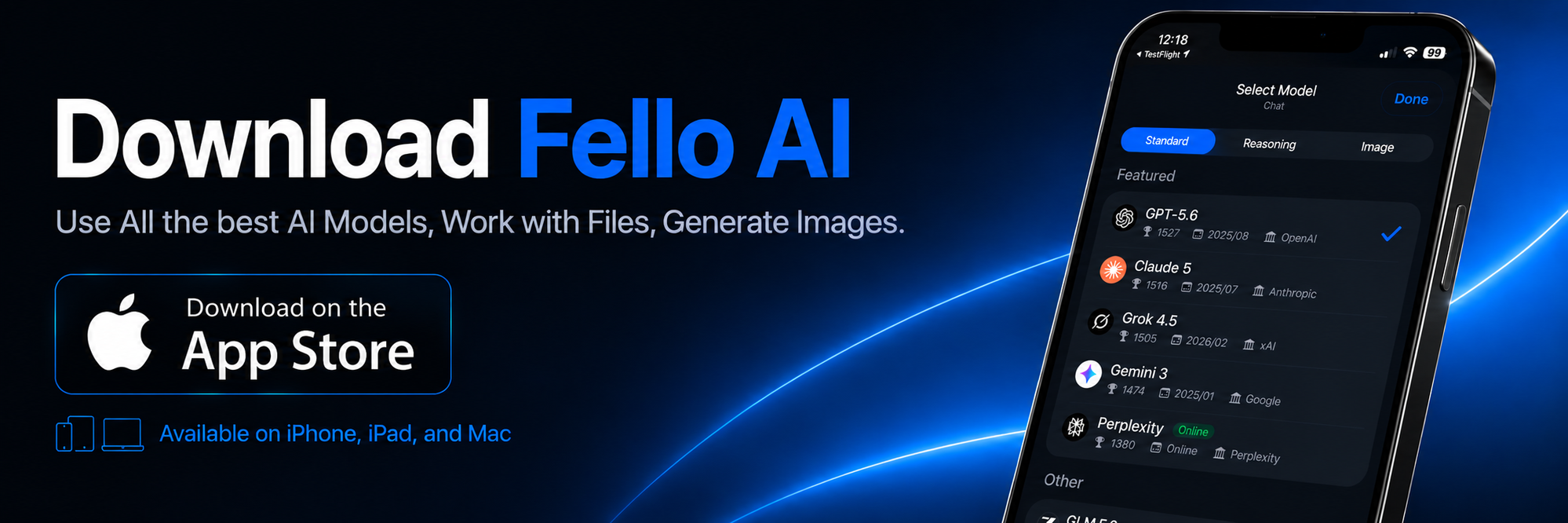
A multi-model app flips that risk. With ChatGPT, Claude, Gemini, Grok, and DeepSeek all available in one place, no single discontinuation breaks your workflow, and you always get to use whichever model is best for the task in front of you. That is the core case for a tool like Fello AI on Mac, and it is a big part of why we cover the best multi-model ChatGPT alternatives for Mac in depth. If you want the full landscape of what is strong right now, our guide to the best AI models breaks down where each one wins.
Conclusion
ChatGPT Atlas is gone as of August 9, 2026, so your job now is simple. Pull anything you still need out of the old app while its local profile survives, then choose a replacement that fits how you actually work. If you want an agentic browser, start with Perplexity Comet or Dia. If you want a durable AI hub on your Mac, a multi-model app like Fello AI is the safer call, because it never leaves you stranded when one company changes its mind. For the full picture of Atlas and what it was, read our complete ChatGPT Atlas guide.
Still comparing alternatives? Fello AI is the one that doesn’t make you choose, every major model in a single app for $9.99.
FAQ
When did ChatGPT Atlas shut down?
OpenAI set August 9, 2026 as the deprecation date for ChatGPT Atlas and announced it on July 9, 2026. Access to the standalone browser ends permanently after that date.
Can I still use ChatGPT Atlas?
No, not as a supported browser. OpenAI’s wording is that Atlas may no longer open, browse, or support agentic workflows after August 9, 2026, and it no longer receives security updates. If the app still opens on your Mac, use it only to retrieve data, not to browse.
Did my Atlas bookmarks and passwords transfer automatically?
No. Bookmarks, history, open tabs, saved passwords, and cookies never moved automatically. OpenAI’s advice was to export bookmarks as HTML files and back up anything else manually before August 9, 2026. If you missed it, the local Atlas profile on your Mac is your best remaining option.
What replaced ChatGPT Atlas?
OpenAI moved Atlas’s features into the ChatGPT desktop app, which now has a built-in browser, plus ChatGPT Work, Codex, and a Chrome extension. There is also a cloud browser that runs tasks remotely on OpenAI’s servers.
What is the best ChatGPT Atlas alternative for Mac?
It depends on how you used Atlas. For agentic browsing, Perplexity Comet is the closest match. For a durable AI hub on Mac, a multi-model app like Fello AI gives you ChatGPT, Claude, Gemini, Grok, and DeepSeek in one place so you are never dependent on a single vendor.
Why did OpenAI discontinue Atlas?
OpenAI decided the browser is a feature, not a destination, and folded Atlas’s tools into products with wider reach. The move was part of a directive to cut back on “side quests,” the same reasoning behind shutting down Sora. Atlas also stayed Mac-only and faced early security issues like prompt injection.