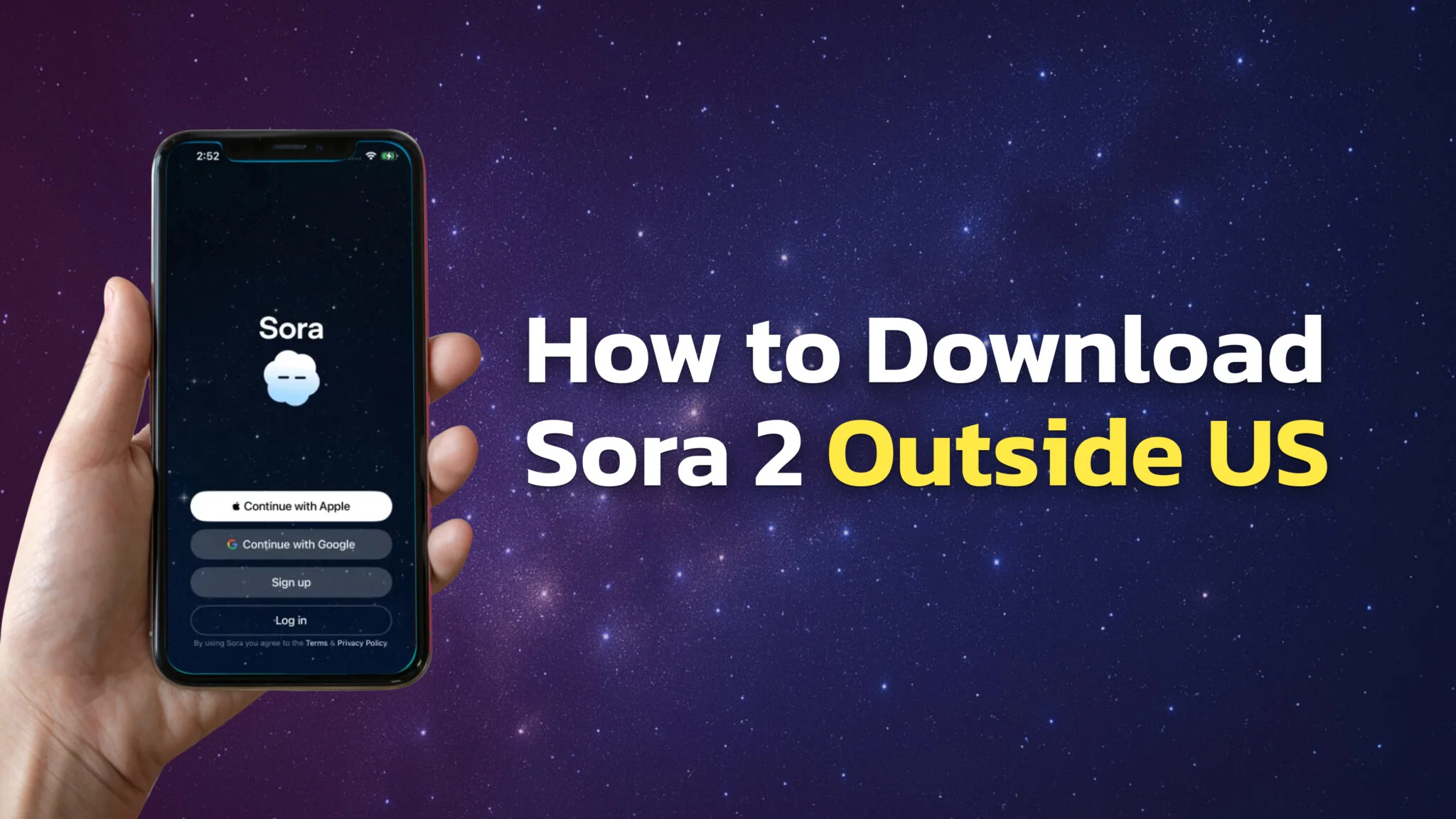
Sora shut down for good, and it is not coming back. OpenAI announced the closure on March 24, 2026, switched off the Sora app and website on April 26, 2026, and will remove the Sora API on September 24, 2026. If you landed here trying to download the app, get an invite code, or set up a Cameo, none of that works anymore, in any region, on any Apple ID.
This page used to be a download guide. It is now the record of what happened. Below you get the full timeline with every confirmed date, the four pressures that killed the product, and straight answers about your old videos and your Cameo face and voice data. We have kept the history of what Sora was, written in the past tense, because the rise and fall took barely seven months.
The Key Takeaways
- Sora died in two stages. The app and website ended April 26, 2026; the API and every
sora-2model are removed September 24, 2026. - OpenAI blamed compute, not money. Its official statement cited tradeoffs in how it applies compute and said nothing about revenue, Disney, or copyright.
- The money did not work anyway. Sora earned roughly $2.1 million in lifetime in-app revenue against a compute bill reported at somewhere between $1 million and $15 million a day, depending on whose estimate you use.
- Downloads collapsed fast. From a peak of about 3.3 million in November 2025 to roughly 1.1 million in February 2026, according to app-intelligence firm Appfigures.
- There is no Sora 3. OpenAI redirected the Sora research team to world simulation work aimed at robotics, not at a new video app.
Is Sora Shut Down? The Short Answer
Yes. Sora is shut down. OpenAI announced the closure on March 24, 2026, ended the Sora app and website on April 26, 2026, and will switch off the Sora API on September 24, 2026. There is no Sora 3 and no announced replacement.
The two dates matter for different people. If you were a regular user, your access ended in April and the apps were pulled from the App Store and Google Play before that. If you were a developer building on the Videos API, you still have a short window, because OpenAI’s own deprecation notice confirms the API keeps running until late September.
That second date is close. As of late July 2026 there are under two months left before sora-2, sora-2-pro, and every pinned snapshot stop responding. Anything still calling those endpoints in production needs a migration plan now, not in September.
One detail from OpenAI’s deprecation notice is worth reading carefully. Every other model on that page lists a recommended replacement, usually a newer GPT or image model. The six Sora entries list none. OpenAI is not moving developers to a successor because there is not one.
The Full Sora Timeline, From Preview to Shutdown
Sora went from the most-hyped AI demo of 2024 to a discontinued product in a little over two years, and from launch to shutdown in under seven months. The compressed timeline is the story.
| Date | What happened |
|---|---|
| February 15, 2024 | OpenAI previews Sora publicly with demo videos generated from prompts |
| December 9, 2024 | Sora 1 opens to ChatGPT Plus and Pro users in the US and Canada |
| September 30, 2025 | Sora 2 launches with an invite-only iOS app, a social feed, and the Cameo feature |
| November 2025 | The Android app arrives; monthly downloads peak at about 3.3 million |
| December 11, 2025 | Disney announces a $1 billion investment and a three-year licensing deal covering 200+ characters |
| February 2026 | Monthly downloads fall to roughly 1.1 million |
| March 24, 2026 | OpenAI announces the shutdown on X and notifies API developers |
| April 26, 2026 | The Sora app and website shut down permanently |
| September 24, 2026 | The Sora API and all sora-2 models are removed |
The gap between the Disney announcement and the shutdown announcement is worth sitting with. Disney committed to the platform in December. Fourteen weeks later OpenAI killed it, and according to TechCrunch reporting, no money ever changed hands.
Why Sora Shut Down
Start with what OpenAI actually said, because it is narrower than most coverage suggests. The company’s formal statement, reported in full by CBS News, read “We’ve decided to discontinue Sora in the consumer app and API. As we focus and compute demand grows, the Sora research team continues to focus on world simulation research to advance robotics that will help people solve real-world, physical tasks.” It added that it makes tradeoffs in how it applies compute across research, product launches, and inference, and that “we know this news is disappointing.”
So OpenAI gave one reason, compute allocation, and one destination, robotics research. It said nothing about revenue, nothing about the Disney deal, and nothing about the copyright and likeness disputes. The separate farewell post on X was purely valedictory, reading “We’re saying goodbye to the Sora app. To everyone who created with Sora, shared it, and built community around it: thank you. What you made with Sora mattered.” Everything in the three sections below the first is reporting and analysis rather than company statement, and it is labelled as such.
The compute bill nobody could justify
Video generation is the most expensive thing a consumer AI app can do, and the reported numbers are ugly. The Wall Street Journal put Sora’s running cost at roughly $1 million a day. Forbes, citing an estimate from Cantor Fitzgerald analyst Deepak Mathivanan, put peak inference cost far higher, at around $15 million a day.
Those two figures are fifteen times apart and neither came from OpenAI, so treat both as estimates rather than facts. What is not in dispute is the other side of the ledger. Sora generated approximately $2.1 million in lifetime in-app purchase revenue. Even against the conservative figure, the app was losing money on a scale no amount of engagement could fix.
The audience showed up and then left
Sora was, briefly, a phenomenon. It hit one million downloads faster than ChatGPT did and dominated app-store charts through the autumn of 2025. Peak monthly downloads reached about 3.3 million across iOS and Android in November, according to app-intelligence firm Appfigures.
Then the novelty burned off. By February 2026, monthly downloads were down to roughly 1.1 million, a drop of about two thirds in three months. An AI-only social feed turned out to be something people wanted to try once, not something they wanted to open every day. For context, ChatGPT was serving around 900 million weekly users over the same period.
Copyright and likeness problems that never got solved
Sora 2 launched with a permissive approach to copyrighted characters and a Cameo feature that let anyone scan their face and voice into generated scenes. Both created immediate problems. OpenAI promised rightsholders more granular control within days of launch, and the deepfake complaints involving public figures never stopped.
The Disney deal was meant to be the fix, converting a legal liability into a licensed partnership worth $1 billion across three years. Instead the deal unwound with the product, and the underlying question of who owns a generated likeness stayed open.
A company that decided it was building something else
The shutdown fits a pattern. OpenAI has been consolidating around coding tools, enterprise products, and a single unified ChatGPT experience, and it retired its Atlas browser in the same period. A standalone consumer video social app was the least strategic thing in the portfolio and the most expensive to run.
Reporting from The Decoder frames it as a deliberate shift toward enterprise customers and a “super app” bundling everything into ChatGPT. Under CEO Sam Altman, compute has been the binding constraint on every decision, and every GPU running a Sora clip was a GPU not serving a paying enterprise workload.
What Happened to Your Sora Videos and Cameo Data
This is the part almost nobody covered, and it is the question most former users actually have.
Your videos are gone unless you exported them
OpenAI told users to export their videos and images directly from the Sora library before the shutdown. The company said it had not decided whether there would be a final export window after the cutoff dates, and that users would get an email if one opened.
If you downloaded your clips before April 26, 2026, you have them locally and they are yours. If you did not, your generation history, drafts, and saved projects went with the platform. There is no recovery path, no archive, and no support queue that can get them back. The export window closed with the app.
Your Cameo likeness went with the account
Cameo was the feature that made Sora feel different and the feature that made it controversial. Users scanned their face and voice so the model could insert them into generated scenes, which meant OpenAI held biometric-adjacent data for a large number of people.
OpenAI’s public position was that once the shutdown deadlines pass, user data is permanently deleted. That covers Cameo material along with everything else in the account. What the company has not published is a separate, itemised statement about likeness data specifically. So if you want confirmation rather than a general retention policy, submit a data-deletion request through OpenAI’s privacy process instead of trusting the shutdown to have handled it.
Your subscription and the ChatGPT question
Sora’s paid tiers stopped billing with the product. If you were paying for Sora-specific generation credits, that charge ended when the app did.
The murkier question is whether Sora 2 video generation survived anywhere inside ChatGPT. Before the April shutdown, reporting indicated the model stayed accessible behind the ChatGPT paywall even as the standalone app closed. OpenAI has not published a clear statement about what happened after April 26, and its own help documentation on the discontinuation is not publicly readable to us. We are not going to guess. If you hold a ChatGPT subscription, check your own account rather than trusting a blog post, including this one, and treat the September 24 API date as the hard outer limit for anything Sora-branded.
What the Sora App Actually Was
Kept here as a record. Everything in this section describes a product that no longer exists.
Sora 2 launched on September 30, 2025 as an invite-only iOS app, and it was not just a video generator. It was a social network built entirely from AI output, with a scrolling feed, a remix culture, and no human-shot footage anywhere in it. Every clip carried a visible, moving watermark meant to stop the output being passed off as real.
The signature feature was Cameo. You scanned your face and voice once, then you could appear in anyone’s generated scene, and they could appear in yours if you granted permission. That is what made the app spread, and it is also what generated the deepfake headlines within days of launch.
Sora 1 versus Sora 2
Sora 1 arrived in December 2024 as a web tool bolted onto ChatGPT Plus and Pro, limited to the US and Canada. It generated silent clips, it was slow, and it was clearly a research demo with a subscription attached.
Sora 2 was a different proposition. It added synchronised audio, markedly better physics and object permanence, longer clips, the Cameo system, and the social feed. The jump in realism between the two was the single biggest reason Sora 2 went viral, and it briefly made Sora the reference point every other video model was measured against.
What people said about it
The early reaction split three ways and stayed split. Creators were impressed by the physics, the lip sync, and how little prompt effort a usable clip took. That reaction drove the download spike.
The second reaction was unease. An endless feed of synthetic video featuring real people’s faces struck a lot of users as unsettling rather than fun, and “slop” became the word critics reached for. The third reaction was the serious one, from journalists and researchers who pointed out that a consumer app producing photorealistic video of identifiable people was a misinformation problem regardless of watermarks. None of those concerns were resolved before the product ended.
Is Sora Coming Back?
No. OpenAI has announced no successor, no Sora 3, and no return date. The API shutoff on September 24, 2026 is final.
The research did not stop, though, and that distinction gets lost in most coverage. OpenAI stated that the Sora research team continues to focus on world simulation research aimed at advancing robotics, so that AI systems can help people with real-world physical tasks. The video model was always a step toward machines that understand how the physical world behaves, and that work carries on inside the company.
What ended is the product and the brand. What continues is infrastructure research with no consumer video roadmap attached to it. If OpenAI ships a video generator again, it will be a new product with a new name, and nothing currently suggests one is close.
What to Use Instead of Sora
Sora’s exit reshuffled the whole category, and the short version is that Google Veo 3.1, ByteDance Seedance 2.0, Runway Gen-4.5, and Kling 3.0 absorbed most of what Sora was doing. Veo took the realism crown Sora used to hold and adds native audio, Runway remains the pick for fine camera and motion control, and Kling is the value option.
We test these properly rather than ranking them from press releases, so rather than repeating it here, the full comparison lives in our tested ranking of the best AI video generators. If budget is the constraint, the free AI video generators with no watermark breakdown covers what you can get without paying, including which free tiers allow commercial use.
Two Sora-adjacent options are worth naming directly. Grok Imagine’s video generation is the closest thing to Sora’s fast, loose, social-first feel, and ByteDance’s Seedance is the model that most directly took over Sora’s position on realism benchmarks.
There is a broader lesson in how this ended. Everyone who built a workflow around a single model from a single vendor lost that workflow overnight, on a schedule they did not control. Tools that give you access to several models at once, like Fello AI, are a hedge against exactly that, because when one provider walks away you swap models instead of starting over. It is also worth checking the full ChatGPT model comparison if you are working out what OpenAI still offers.
Bottom Line
Sora is shut down and the record is closed. The app and website ended April 26, 2026, the API ends September 24, 2026, OpenAI never explained itself beyond a thank-you post, and no successor is coming. If you still have anything running against sora-2, migrate it in the next eight weeks.
For everyone else the practical next step is picking a replacement, and the honest answer is that the category is in better shape than it was when Sora launched. Start with the tested ranking, pick on the basis of what you actually make, and this time keep your source files somewhere you control.
FAQ
—
Is Sora shut down?
Yes. OpenAI announced the shutdown on March 24, 2026, closed the Sora app and website on April 26, 2026, and will remove the Sora API on September 24, 2026. The apps were pulled from the App Store and Google Play before the final cutoff, and there is no Sora 3 or announced replacement.
What happened to my Sora videos?
If you exported them from the Sora library before April 26, 2026, you still have them. If you did not, your videos, drafts, and generation history were deleted with the platform. OpenAI said it had not decided whether to open a final export window and would email users if one appeared. There is no recovery path now.
What happened to my Cameo face and voice data?
OpenAI’s stated policy is that user data is permanently deleted once the shutdown deadlines pass, which covers Cameo material. The company has not published a separate itemised statement about likeness data, so if you want confirmation rather than a general retention policy, submit a data-deletion request through OpenAI’s privacy process directly.
Is Sora coming back?
No. There is no Sora 3, no successor, and no announced return date. OpenAI redirected the Sora research team to world simulation research aimed at robotics, which is infrastructure work rather than a consumer video product. Any future OpenAI video tool would be a new product under a new name.
What should I use instead of Sora?
Google Veo 3.1 is the closest replacement for realism and it adds native audio. Runway Gen-4.5 gives the most camera and motion control, ByteDance Seedance 2.0 leads on physics, and Kling 3.0 is the value pick. Our tested ranking of the best AI video generators compares all of them on quality, price, and commercial rights.